How to Check Egg Freshness: 5 Simple Tests That Actually Work
Knowing how to check egg freshness is one of those small kitchen skills that makes a big difference. Whether you've found a box of eggs lurking at the back of the fridge or you're simply making sure every egg earns its place on your plate, a quick freshness check takes seconds and tells you everything you need to know.
At St. Ewe, we believe every egg should be something worth cracking into - so here's how to make sure yours is exactly that.

How Long Do Eggs Actually Stay Fresh?
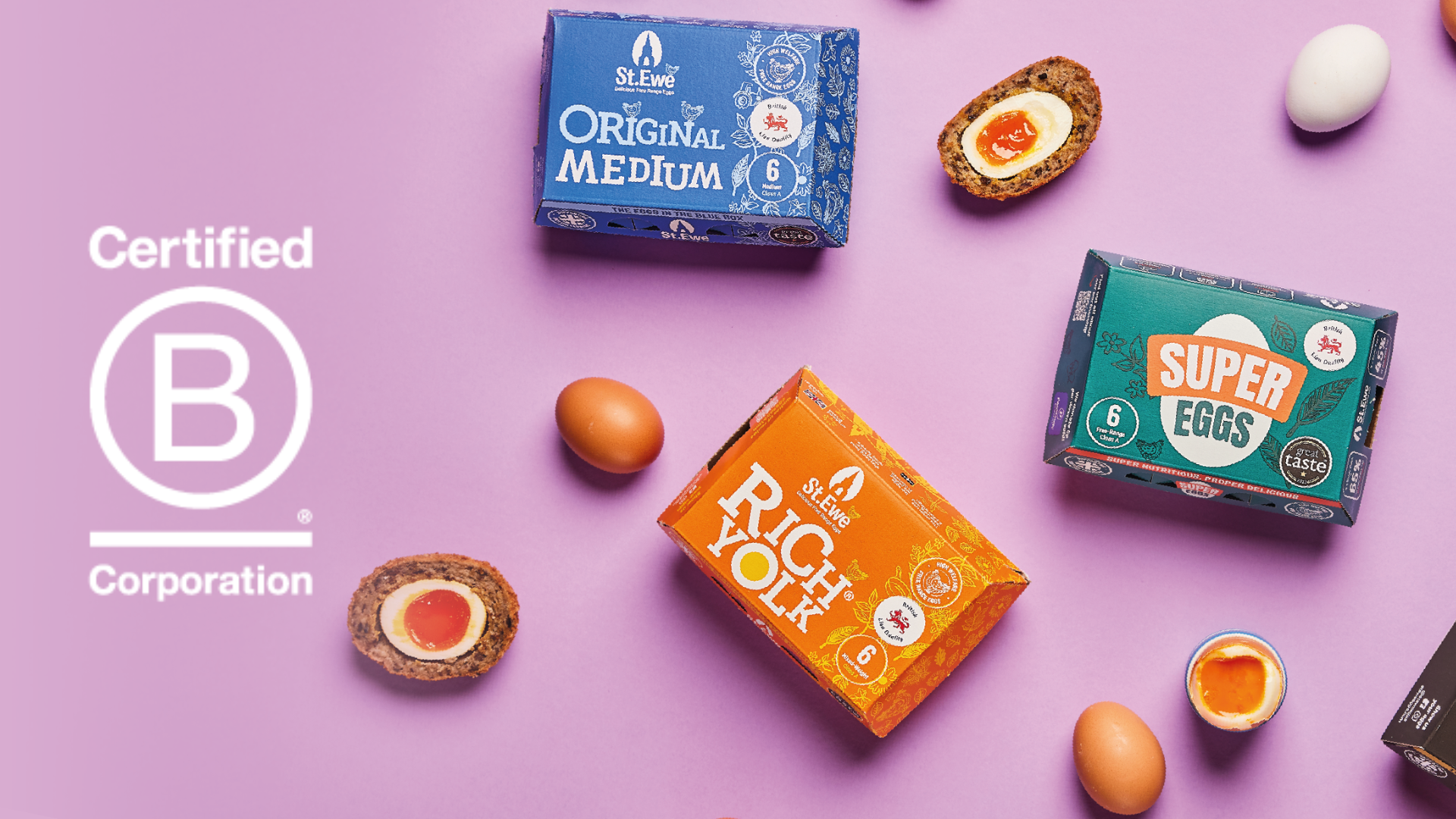
All eggs under the British Lion Code of Practice (including St. Ewe's) carry a best-before date stamped directly on the shell, set at 28 days from the day they were laid. That's your first and most reliable guide to egg freshness.
What Does 'Best Before' Really Mean?
Knowing how to check egg freshness takes seconds and makes a real difference - not just to the quality of your cooking, but to how much food ends up unnecessarily in the bin.
Best before doesn't mean bad after. The Food Standards Agency is clear that it's a guide to quality, not a hard safety deadline. An egg past its best-before date isn't automatically destined for the bin, but it does mean it's worth doing one of our simple egg freshness checks before you crack it open.
How Storage Affects Freshness
Where you keep your eggs matters more than most people realise. The fridge is the perfect steady, cool environment that slows down the exchange of moisture and air through the eggshell, which is what causes an egg to age.
Contrary to popular belief, the egg tray in the fridge door is actually the least stable spot in the fridge. This is because it’s subject to repeated temperature changes whenever the door swings open. Store them in their original carton on a middle shelf, and they'll stay fresher for longer.
Room temperature storage works too if you're planning to use eggs within a day or two, or if you're baking and prefer eggs at room temperature for a better batter. Just keep them out of direct sunlight and away from anything warm.

How to Check Egg Freshness - 5 Simple Tests
Not sure if that egg is still good? These five quick checks will give you a confident answer every time - no specialist kit required!
1. The Float Test
The float test is the easiest and most reliable way to check egg freshness at home. Here's how to do it:
- Fill a bowl or deep glass with cold water
- Gently lower the egg into the water
- Watch where it settles
What the results mean:
- Sinks and lies flat on the bottom - your egg is fresh and good to use
- Sinks but tilts or stands upright - still safe to eat, but use it soon
- Floats to the surface - time to let it go
The science behind it is simple. Every eggshell is slightly porous, and as an egg ages, moisture slowly evaporates through those tiny pores and is replaced by air. The larger the air pocket grows, the more buoyant the egg becomes. A floating egg isn't always definitively bad, but it's old enough that a sniff test after cracking is strongly advised - and when in doubt, trust your instincts.
2. The Sniff Test
One of the oldest tricks in the book, and still one of the best. A truly fresh egg has almost no smell at all - crack one open and you'll notice it smells clean and neutral. A bad egg, on the other hand, makes itself known immediately with a distinctly sulphurous, unpleasant odour.
You can sometimes detect a bad egg before cracking - give it a careful sniff at the round end where the air pocket sits. But the sniff test is most reliable once the egg is opened. If something smells off, trust your nose and don't use it.
3. The Shake Test
This one takes seconds. Hold the egg close to your ear and give it a gentle shake. A very fresh egg will be almost completely silent - the contents are dense and compact, leaving no room to move. If you hear a sloshing or swishing sound, the egg whites have thinned with age, allowing the yolk to move more freely inside.
A little sound doesn't necessarily mean the egg is bad, but it's a good prompt to follow up with the sniff or crack test before using it in anything where texture matters - poached eggs, for instance, or a delicate meringue.
4. The Visual Shell Check
Before you even think about cracking, take a look at the eggshell. A good egg should look clean, dry, and intact. Here's what to look out for:
- Cracks or fractures - even hairline cracks can allow bacteria to enter; if in doubt, discard
- Sliminess - a sign of bacterial contamination on the shell surface
- Powdery residue or unusual coating - another indicator that something isn't right
A clean, smooth shell is a good sign. It's also worth noting that a slightly rough or chalky texture is perfectly normal in high-quality free-range eggs - it's simply a characteristic of the shell and nothing to worry about.
5. The Crack and Inspect Test
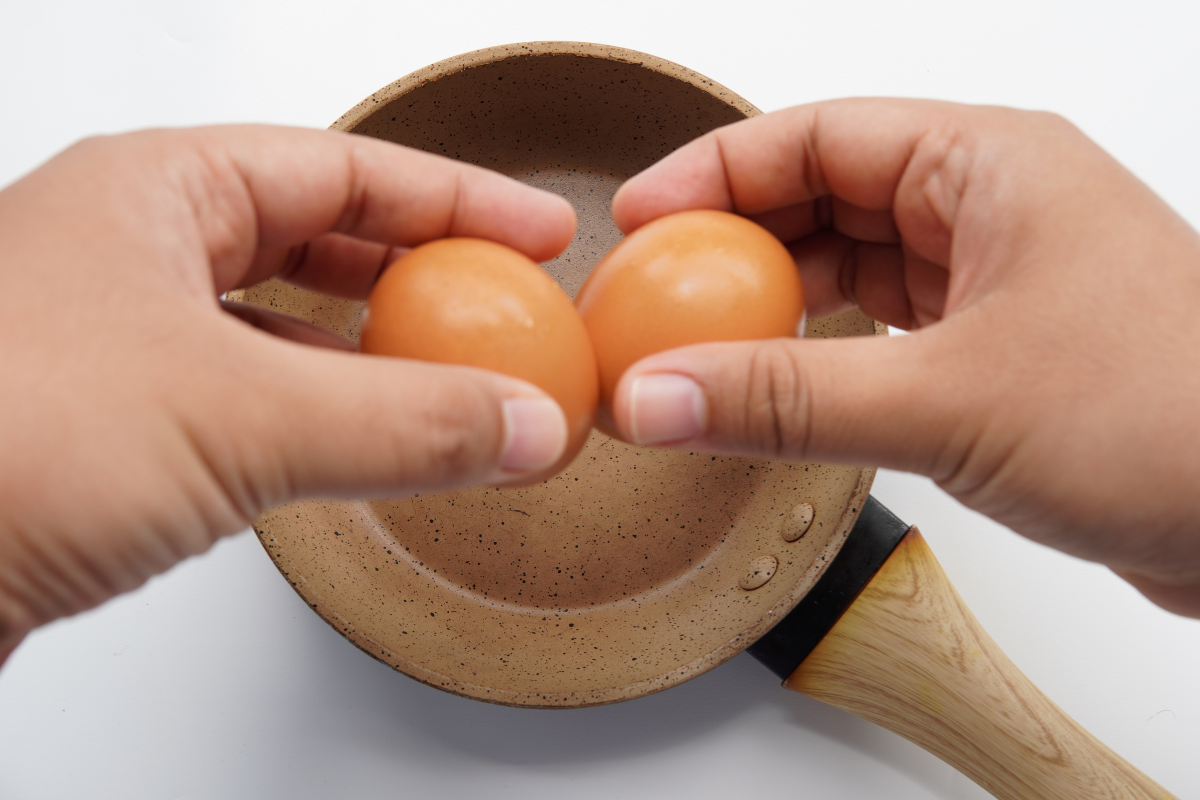
This is your final (and most telling) egg freshness check. Crack the egg onto a clean flat plate and take a good look at what's in front of you.
A fresh egg will have:
- A yolk that sits tall, round, and domed
- A thick, gel-like white that holds close to the yolk
- A clear or slightly cloudy white - cloudiness actually indicates a very fresh egg
An older egg will have:
- A flatter, wider yolk that spreads easily
- A watery, thin white that runs across the plate
- A more translucent, runny appearance overall
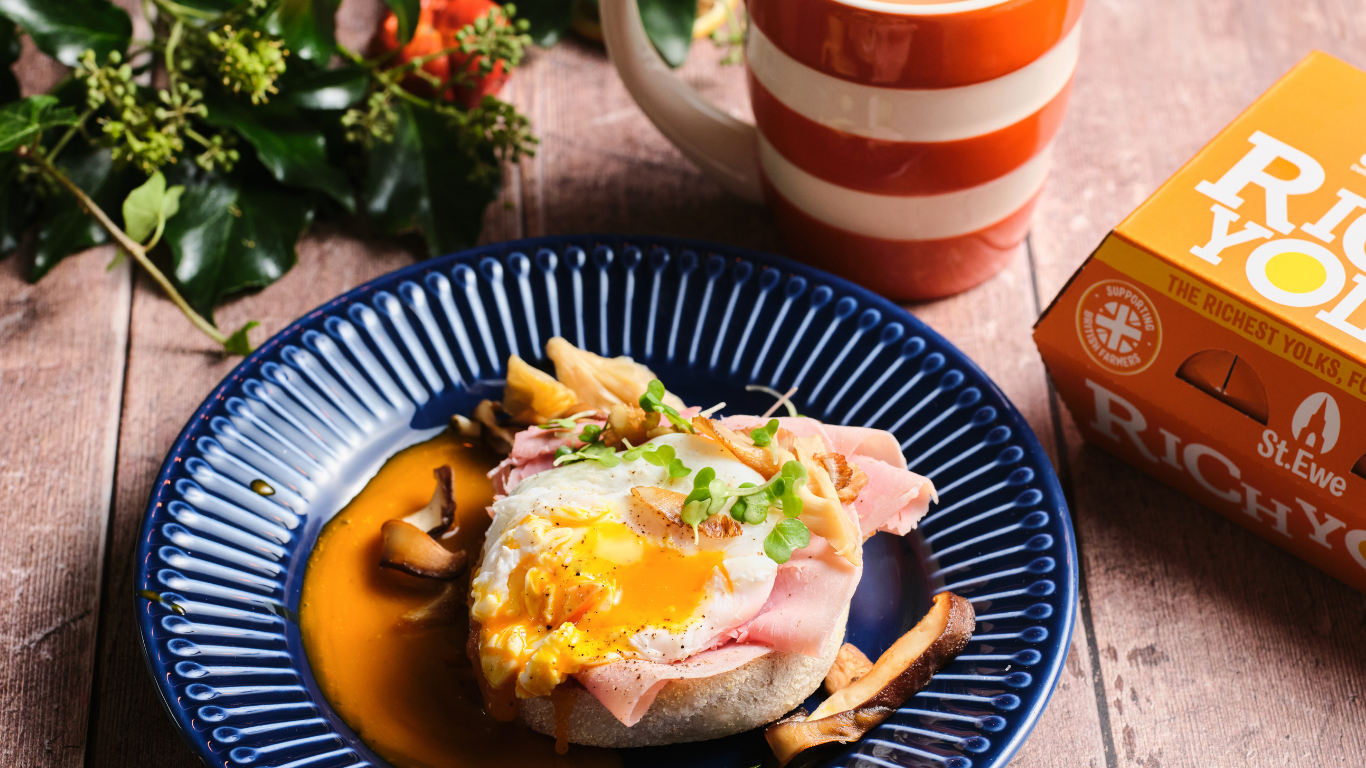
With St. Ewe eggs, a genuinely fresh egg is hard to miss - that vibrant orange yolk is exactly what you're looking for. Our Rich Yolk eggs are a good benchmark for what a truly fresh, free-range egg looks like inside.

What Does a Truly Fresh Egg Look Like Inside?
The Yolk Tells the Story
If the crack-and-inspect test is the ‘how’, this is the ‘why’.
Yolk colour is a direct reflection of how a hen has been living. At St. Ewe, our hens are fed a highly balanced, nutritious diet supporting their immune and reproductive health alongside everything they forage freely on the range.
Hens that roam freely and forage naturally consume a diet rich in carotenoids, the natural pigments found in grass, plants, and insects. The result is a golden-coloured, rich yolk that sits proudly in the pan.
A pale, washed-out yolk tells a different story. It's a sign of a hen with limited access to a varied, natural diet. And while it may still be technically fresh, it won't have the same depth of flavour or nutritional richness.
At St. Ewe, that vivid yolk colour is a natural consequence of hens that are genuinely well cared for. Our Rich Yolk range is the most striking example of what good welfare looks like on a plate.

Can You Still Eat Eggs Past Their Best Before Date?
The short answer is: sometimes, yes. The best-before date is a quality marker, not an on/off switch. An egg doesn't spoil the moment that date passes, but it does mean a freshness check is a good idea before you use it.
When It's Fine, When It's Not
It's likely fine if:
- The float test shows it sinking, even if tilting slightly upright
- There's no sulphurous smell after cracking
- The white is still reasonably thick, and the yolk holds its shape
- It's only a day or two past the best-before date and has been stored in the fridge throughout
Time to let it go if:
- It floats
- There's any smell at all before or after cracking
- The white is completely watery, and the yolk breaks immediately on cracking
- There are any cracks in the shell or visible discolouration inside
If you're cooking for young children, pregnant women, elderly people, or anyone with a compromised immune system, stick firmly to the best-before date and don't take chances. For everyone else, let the egg freshness tests guide you.

The Best Ways to Use Older-But-Still-Good Eggs
An egg that's a week or so old isn't a lesser egg - it's just better suited to certain usages. In fact, for a couple of kitchen tasks, a slightly older egg genuinely outperforms a very fresh one.
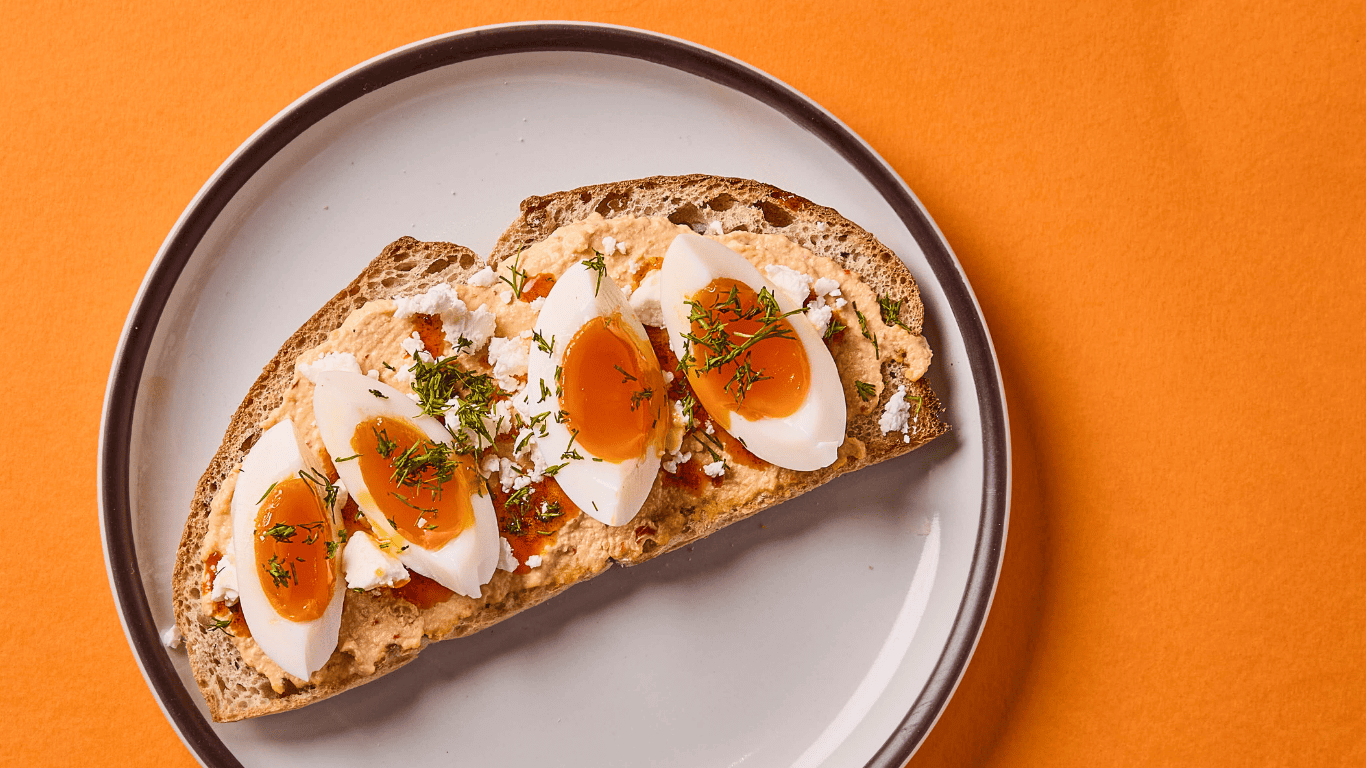
- Hard-boiling: Older eggs peel far more easily than fresh ones. The air pocket that develops with age creates a small gap between the shell membrane and the white, meaning that satisfying, clean peel rather than a frustrating, pitted mess. Try Paul Ainsworth's method in our perfectly boiled eggs recipe.
- Baking: Slightly older egg whites whip to a greater volume than very fresh ones, making them ideal for cakes, meringues, and anything that benefits from a good rise. Head to our baking recipes for plenty of inspiration.
- Frittatas and baked egg dishes: Where a firm set matters more than a domed yolk, a slightly older egg works beautifully. Our kale and potato frittata is a great way to put them to good use.


Freshness You Can Taste - The St. Ewe Difference
Learning how to test an egg for freshness is important for a reason - but the best way is to start with an egg you can trust.
At St. Ewe, freshness is built into the way we work - from the family farmers we partner with across Cornwall and beyond, to the short, traceable supply chain that gets our eggs from hen to shelf as quickly as possible. Our hens roam freely and live in conditions that our farmers are genuinely proud of. That shows up in every egg: a deep vibrant yolk, a white that holds its shape, a shell that does its job.
We're proud to carry the British Lion mark (the UK's highest standard for egg safety and quality) and to go well beyond it. Every St. Ewe egg is a product of care that starts long before it reaches your kitchen.
So next time you crack one open, you'll know exactly what a truly fresh egg looks like. And if it happens to be one of ours, we're quietly confident it'll pass every test on this list.
Discover our award-winning free range eggs →
Conclusion
A good egg is a terrible thing to waste, and more often than not, the one you were about to throw away is perfectly fine to eat. Learning how to check egg freshness is all it takes to cook with confidence and cut down on needless waste.
At St. Ewe, we believe every egg deserves to be appreciated — from the moment a hen has spent 26 hours delicately curating it, to the moment it's laid, and finally to the moment it reaches your plate or one of the finest restaurant menus across the UK. Start with a great egg, store it well, and trust your senses, and you won't go far wrong.
There's never been a better eggs-cuse to crack open a St. Ewe egg and taste the difference for yourself.
Can you freeze eggs?
Yes - just not in their shells. Crack them into a sealed container, beat lightly, label with the date, and freeze for up to six months. Separate yolks and whites first if you prefer more flexibility when cooking.
How to check if an egg is fresh or not?
Start with the float test - sink means fresh, float means old. Follow up with a shake test, a visual shell check, and a sniff after cracking. A fresh egg will have a tall golden yolk, thick white, and no smell whatsoever.
What are the six ways to check the freshness of eggs?
The float test, the sniff test, the shake test, the visual shell check, the crack-and-inspect test, and checking the best-before date on the shell. Used together, they give you a complete and confident picture of whether your egg is good to go.
Is the egg float test accurate?
It's a reliable indicator of age, but not a definitive safety test. A sinking egg is almost certainly fresh; a floating egg is old and potentially bad. For a complete picture, follow the float test with a sniff check after cracking.
What is the egg float test?
A simple freshness check using a bowl of cold water. Fresh eggs sink and lie flat. Older eggs tilt upright. Eggs that float have developed a large air pocket through moisture loss and should be checked carefully before use.
Why is my egg yolk pale?
Yolk colour reflects a hen's diet. A deep golden yolk comes from hens with access to a natural, varied diet - grass, plants, and insects. A pale yolk suggests a more restricted diet and less outdoor access. It's one of the most visible signs of how a hen has been kept.
How long do eggs last in the fridge?
British Lion eggs carry a best-before date of 28 days from laying. Stored correctly in the fridge (in their original carton on a middle shelf), they'll stay at their best right up to that date, and may still be usable a couple of days beyond it.
Does a floating egg mean it's definitely bad?
Not definitively, but it's a serious warning sign. A floating egg is old - the air pocket inside has grown large enough to make it buoyant. Crack it into a separate bowl and let your nose make the final call. If it smells off at all, discard it.
How do you check egg freshness without water?
Give it a gentle shake near your ear - a silent egg is a fresh egg. You can also inspect the shell for cracks or sliminess, and once cracked, a tall, domed yolk and thick white are both strong signs of freshness.